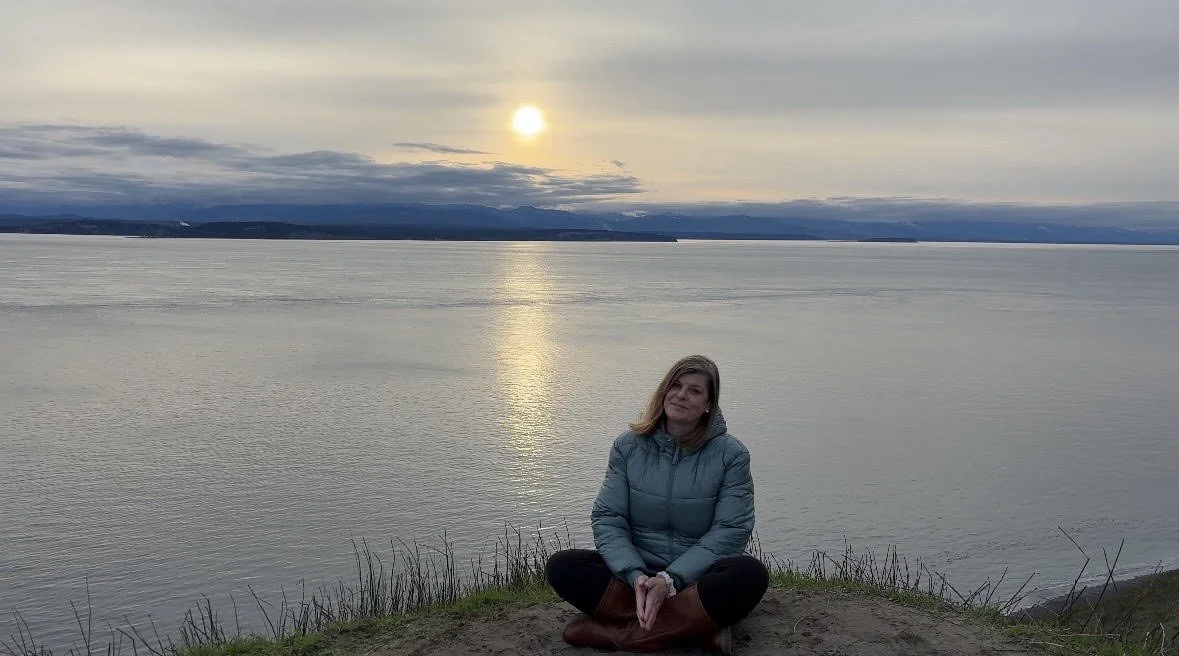
The Story Behind Wabi Sabi Sylvie
Wabi Sabi isn't just the name of my business. It's a Japanese philosophy that has quietly shaped the way I see life for many years. Its message of finding beauty in imperfection deeply resonates with how I strive to live each day.
Living with a chronic illness has left me with physical scars. Over time, I've come to see them differently. Rather than something to hide, they remind me of resilience, growth, and the quiet strength we often discover only after life asks us to find it.
In a world that constantly encourages us to chase perfection, Wabi Sabi offers a different perspective. It reminds us to slow down, take a breath, and appreciate life just as it is—imperfect, ever changing, and deeply beautiful.
Reiki and My Journey
I became a certified Reiki Master years ago, and although I'm not currently offering Reiki sessions, it remains an important part of my life. It has shaped the way I approach presence, compassion, and the quiet moments that help us reconnect with ourselves.
Rather than something I teach, Reiki is simply one of the practices that has shaped my perspective and continues to inspire my videos and the way I move through the world.
Whether I’m filming a quiet walk, creating a nourishing recipe, or reflecting on everyday life, that same spirit of presence and gentle awareness is woven through everything I share.
The Meaning Behind My Logo
I’ve always felt a deep connection to elephants and to Thailand, often called the Land of Smiles. One of my dreams is to visit this beautiful country someday and spend time volunteering at an ethical elephant sanctuary.
To me, elephants represent quiet strength, wisdom, resilience, kindness, and compassion. They remind me that gentleness and strength can exist together, and they have become a symbol of the way I hope to move through life.
The simple, open lines of the elephant reflect the heart of Wabi Sabi Sylvie. There is beauty in simplicity, in leaving room to breathe, and in not needing everything to be perfectly finished or explained.
With its trunk lifted, the elephant has a feeling of openness and hope. To me, it represents moving through life with curiosity, courage, and gentleness.
Thank you for taking a moment to get to know the heart behind Wabi Sabi Sylvie. I’m so grateful you’re here.

What It Means to Live
Wabi Sabi
Wabi Sabi isn't something you achieve. It's a way of seeing the world.
It reminds us that life doesn't have to be perfect to be meaningful. Beauty can be found in weathered hands, changing seasons, quiet mornings, unexpected detours, and the ordinary moments we often overlook.
For me, living Wabi Sabi means:
• Slowing down instead of always rushing
• Letting go of perfection
• Finding beauty in what is simple and authentic
• Meeting myself and others with kindness
Every day is another opportunity to notice what we've been too busy to see.
Maybe Wabi Sabi isn't about becoming someone new.
Maybe it's about appreciating who we've been all along.
“There is a crack in everything. That’s how the light gets in”

Wabi Sabi & Kintsugi
The idea behind the Japanese word Wabi-Sabi is to embrace imperfection and to find the beauty in the imperfect.
Kintsugi is a part of that same concept.
Kintsugi is the Japanese art of repairing broken pottery by mending the cracks with lacquer dusted or mixed with powdered gold, silver, or platinum. The Japanese recognize beauty in damage and repair—and see healing as something to honor, not hide.
I believe this is a powerful representation of human life.
We all carry broken pieces of ourselves in different ways. And it is through the process of gently repairing those pieces—with friendships, community, healing, and love—that we grow stronger.
Kintsugi reminds us not to shy away from our scars, but to wear them proudly. To appreciate the strength, resilience, and beauty we’ve earned along the way.
This is the heart of Wabi Sabi Sylvie.
“There is no comparison between the sun and the moon. They shine when it is their time.”
Today, I share reflections, recipes, videos, and simple practices inspired by the Wabi Sabi philosophy.
I hope something you find here helps you slow down, notice the beauty in ordinary moments, and feel a little more at home in your own perfectly imperfect life.
I'm grateful you're here, and I hope you'll join me as we continue exploring this journey together.